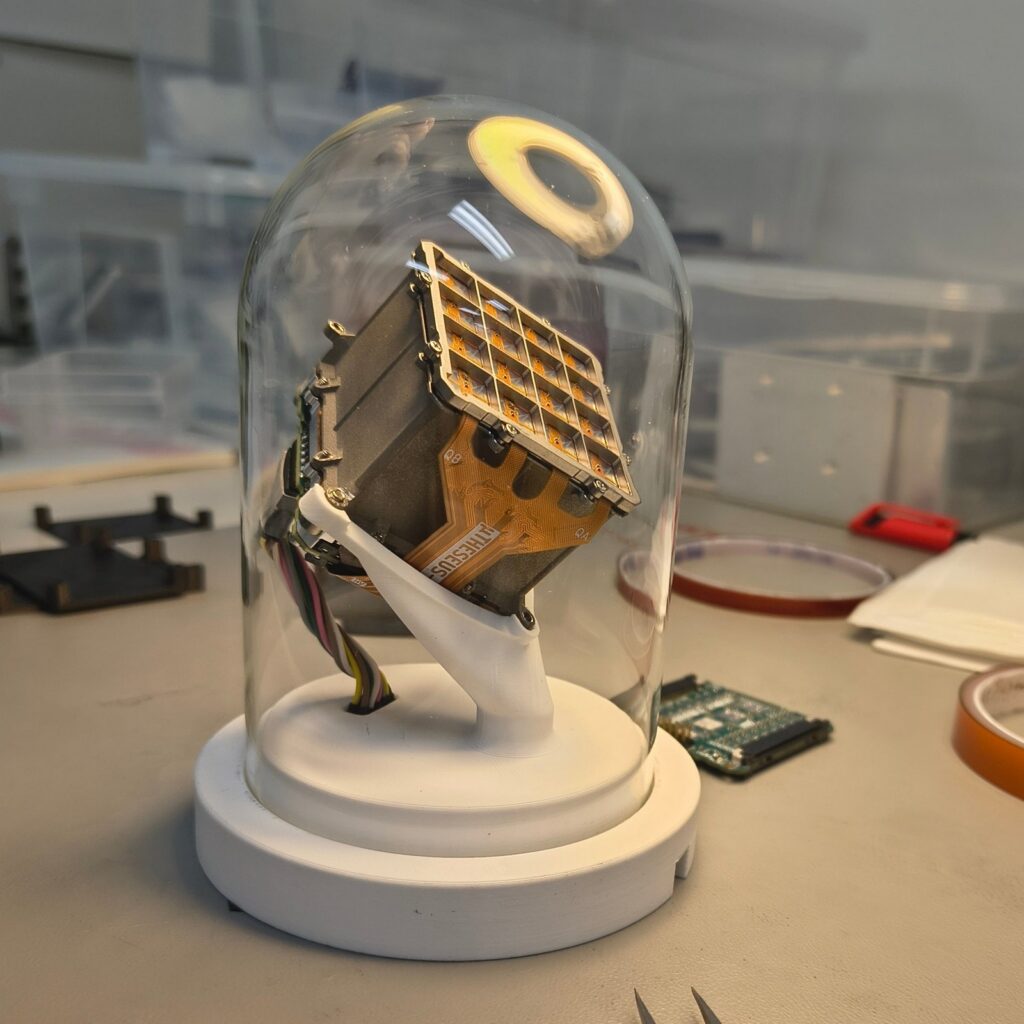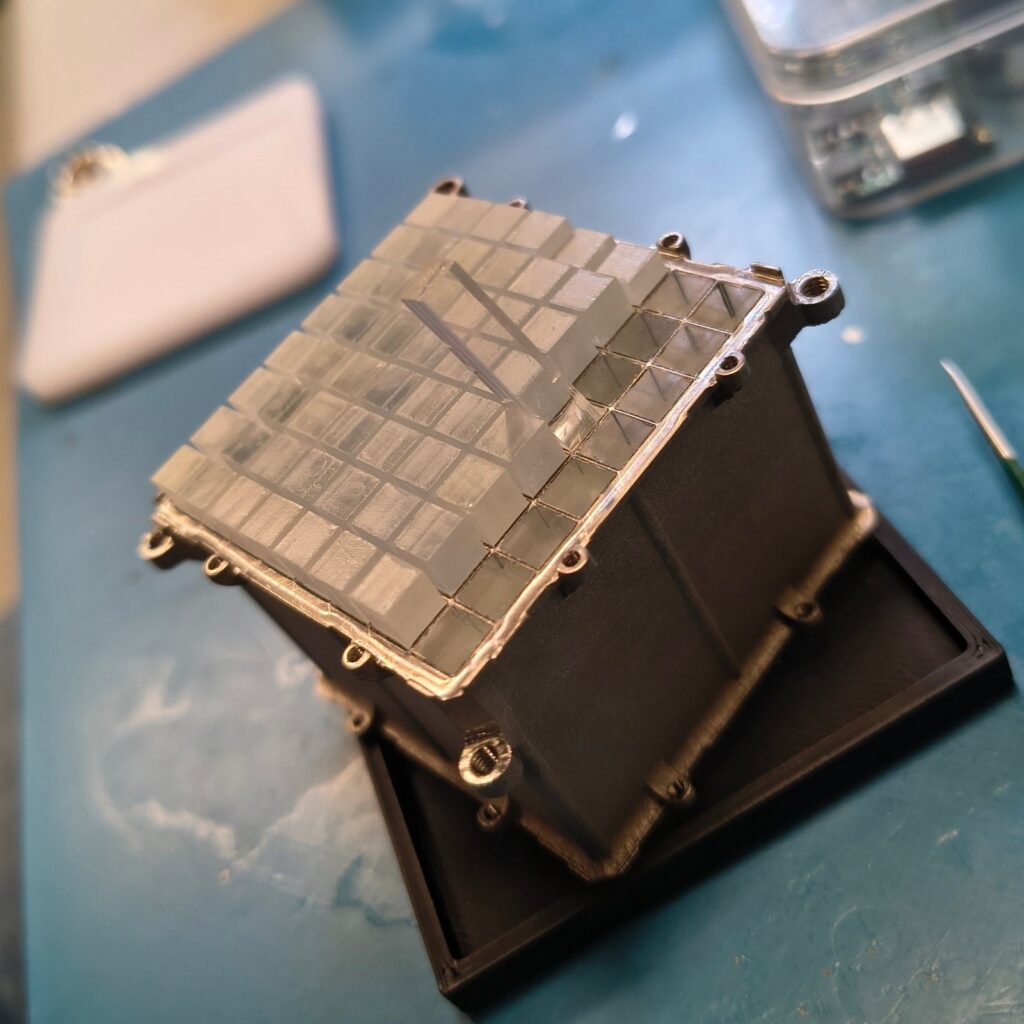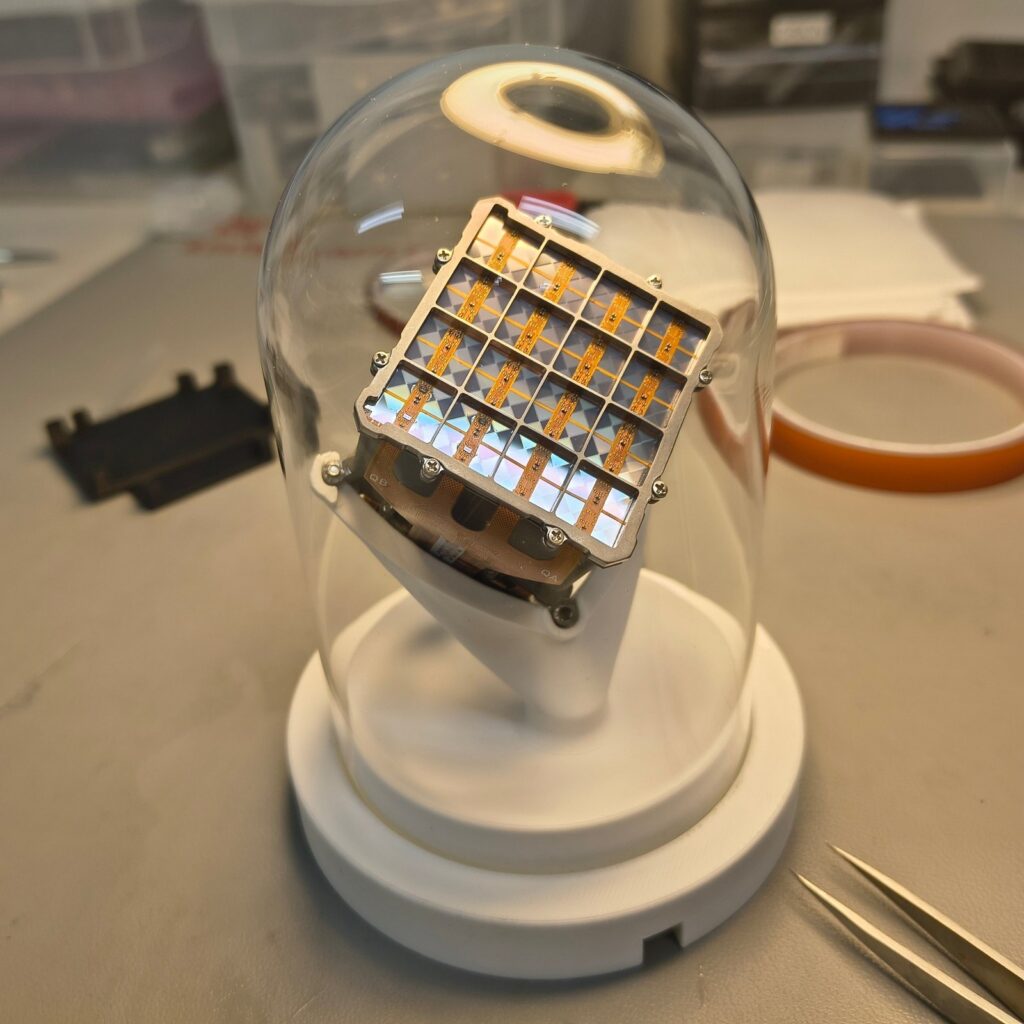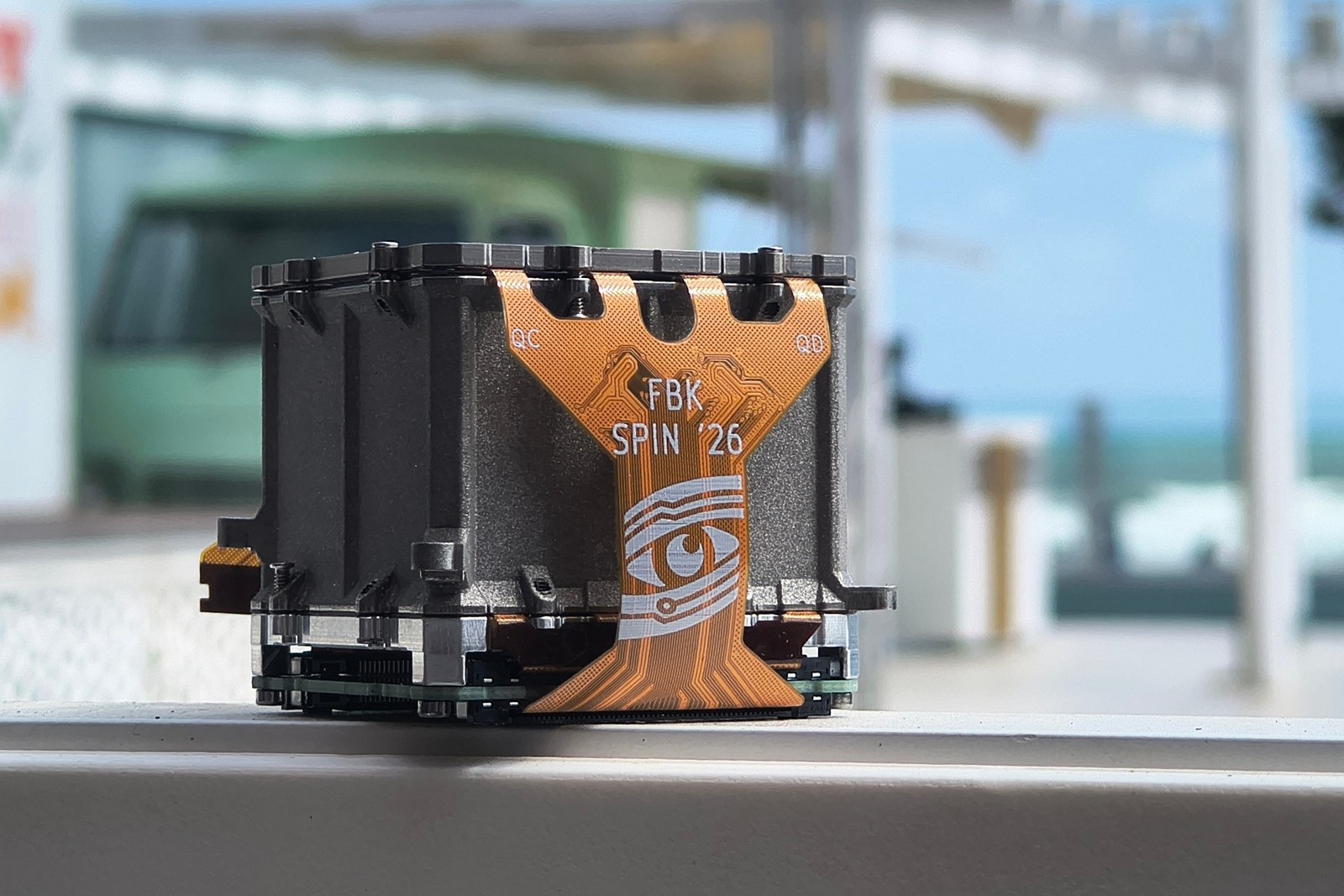
uTheseus is an orbital camera module designed to detect X-ray and gamma-ray spectra. The prototype is fully designed, built, programmed, and tested, and it demonstrates a compact, scalable approach to radiation imaging and event classification.
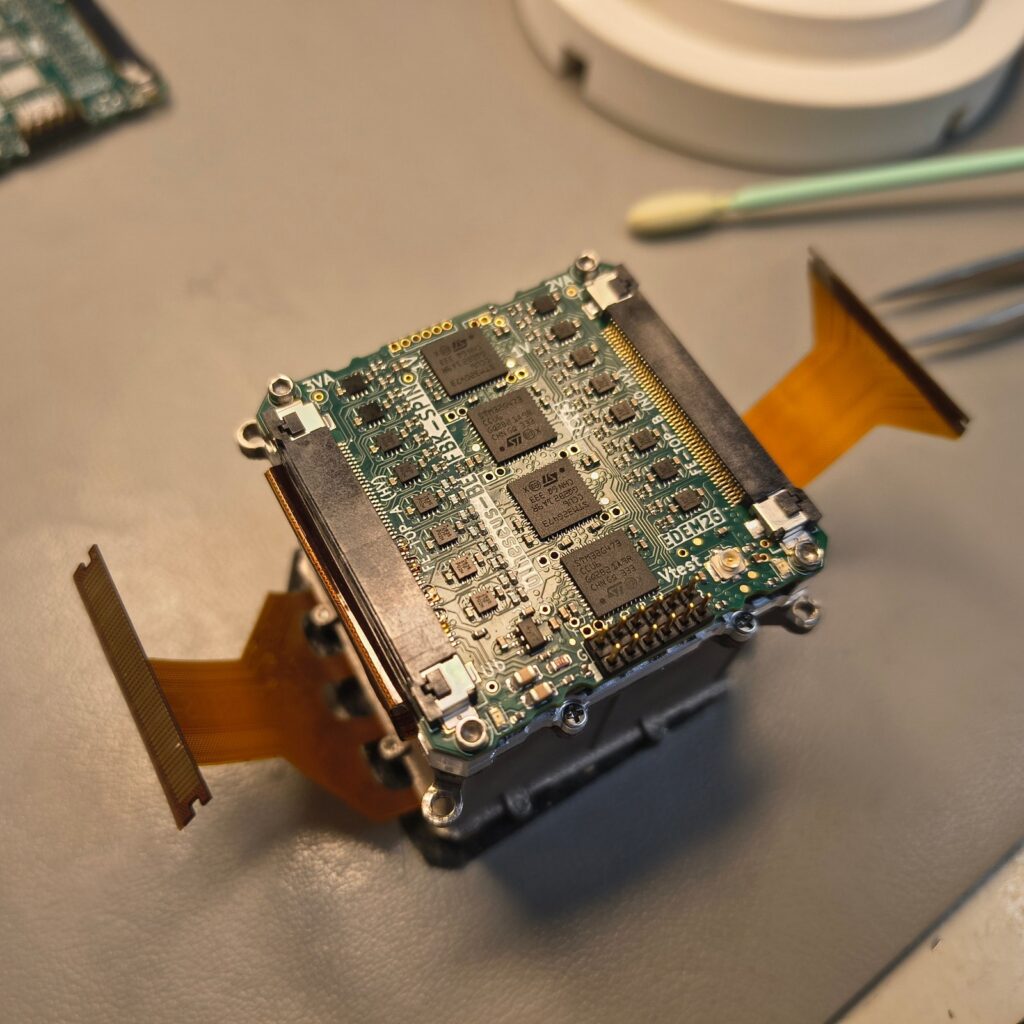
The concept originates from an ESA satellite project, but this prototype focuses on proving the feasibility of a set of low-TRL solutions developed in our lab over recent years. These include functional 3D-printed mechanics, shaped optical pads, flexible PCBs for detector front-end electronics, and a microcontroller-based readout backend.
Key advantages:
- The system introduces several notable characteristics:
- Very low power consumption.
- Significantly higher achievable count rates than the original approach.
- BOM cost reduced by several orders of magnitude for the backend electronics.
- Faster development cycles and lower complexity, thanks to the absence of FPGA modules coordinating multiple subsystems.
- Much smaller footprint, with PCB area reduced by approximately 5x compared with the original architecture using dedicated ASICs for readout.
- Lower weight due to reduced PCB size and simplified integration.
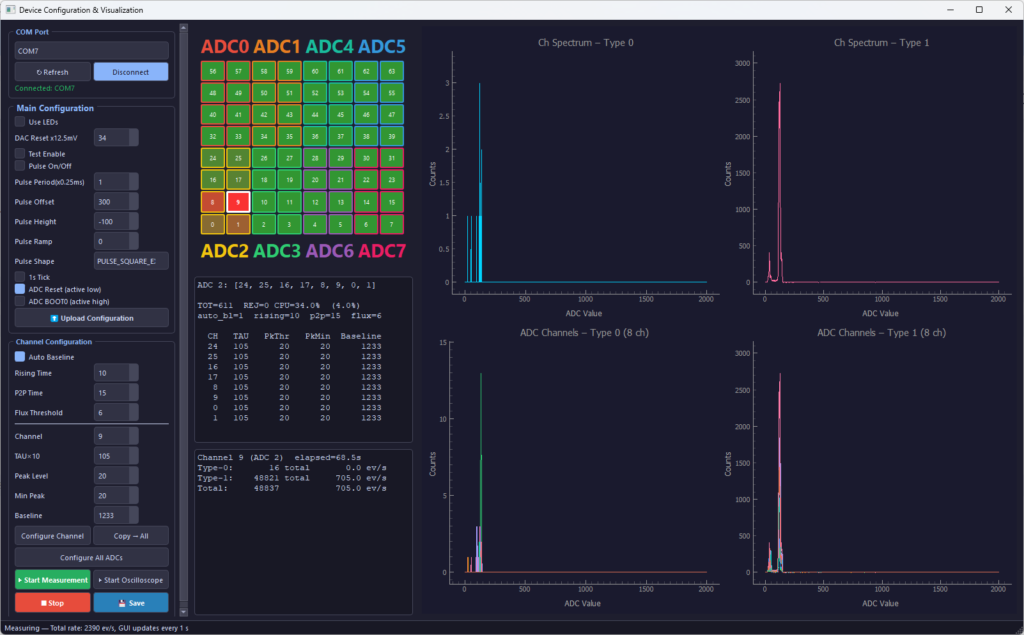
- On-board debugging and USB data transfer, eliminating the need for external equipment during out-of-system evaluation.
System architecture
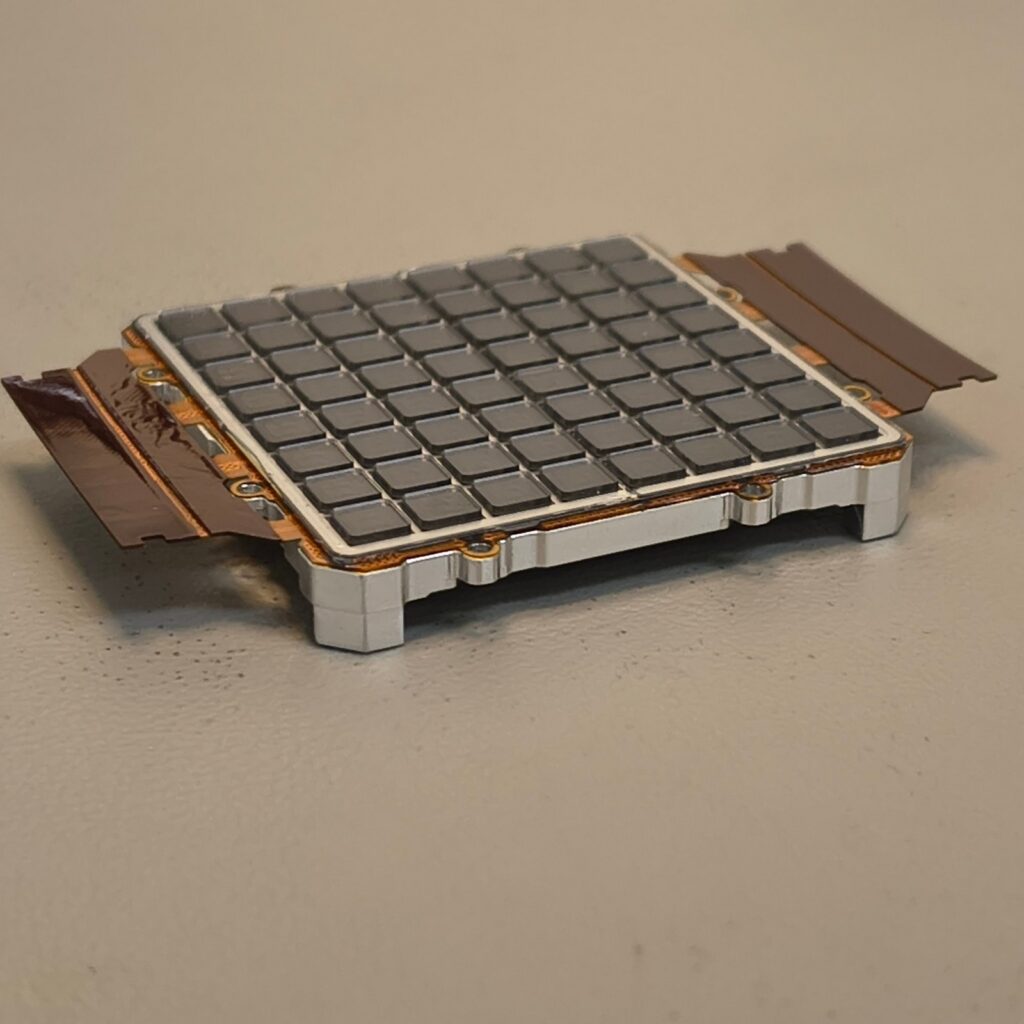
The module is based on an 8×8 SDD array with 5 mm cell size. The current prototype represents a single cell, designed as a building block that can be scaled into a 10×10-cell module with a total active area of 50 x 50 cm^2 per camera.
Beyond the electronics, the mechanical and integration approach was developed to simplify production of the final system. This enables straightforward scaling from a single-cell prototype to a 100-cell camera with minimal redesign effort.