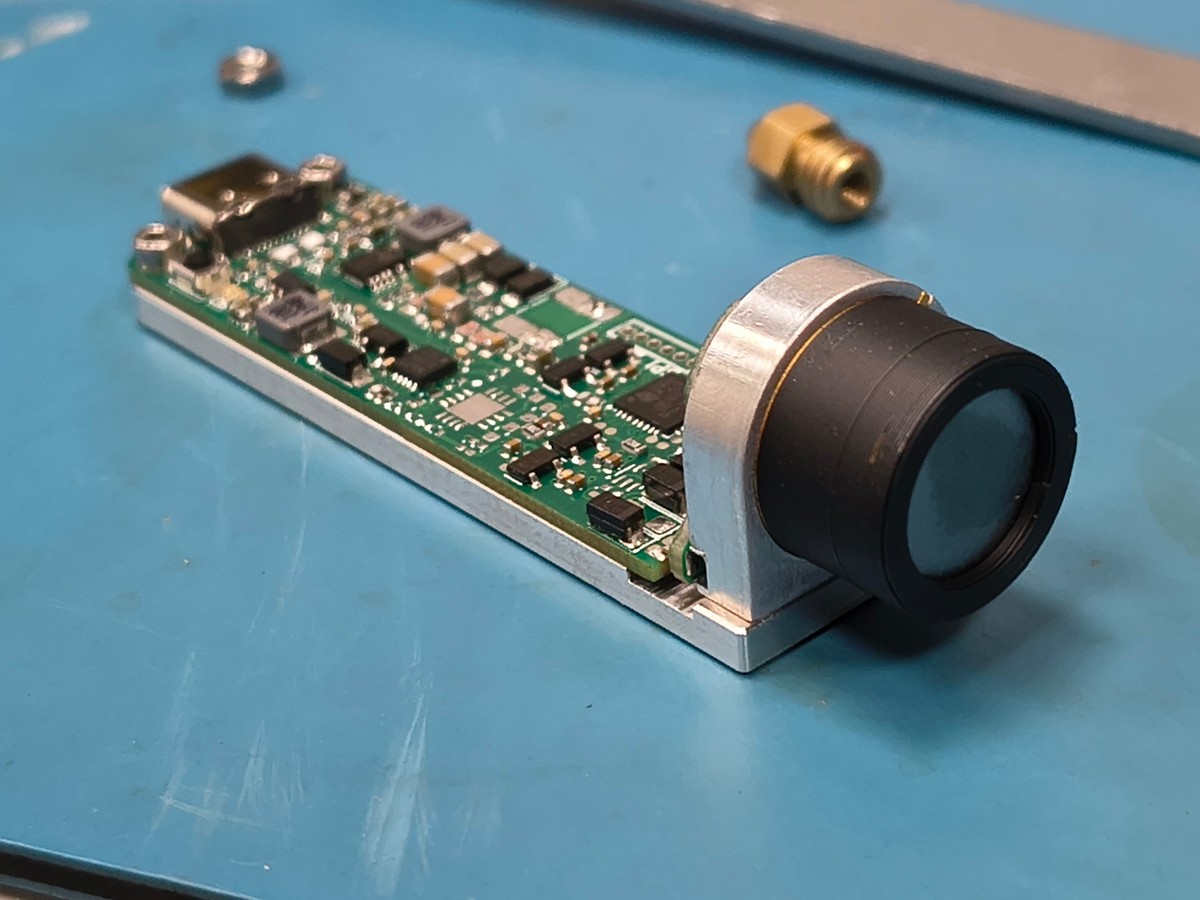
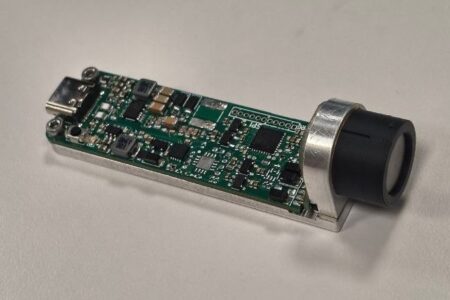
IOTXRF-2026 is a compact USB-powered OEM X-ray spectrometer designed for energy-resolved photon detection in a remarkably small and lightweight form factor. Built around a 32-bit MCU-based architecture, it delivers functionality that in conventional systems would often require a high-performance FPGA, enabled by a custom signal-processing algorithm developed over years of work. The result is a highly integrated instrument that combines low power consumption, advanced timing, and practical deployment flexibility for OEM and scientific applications.
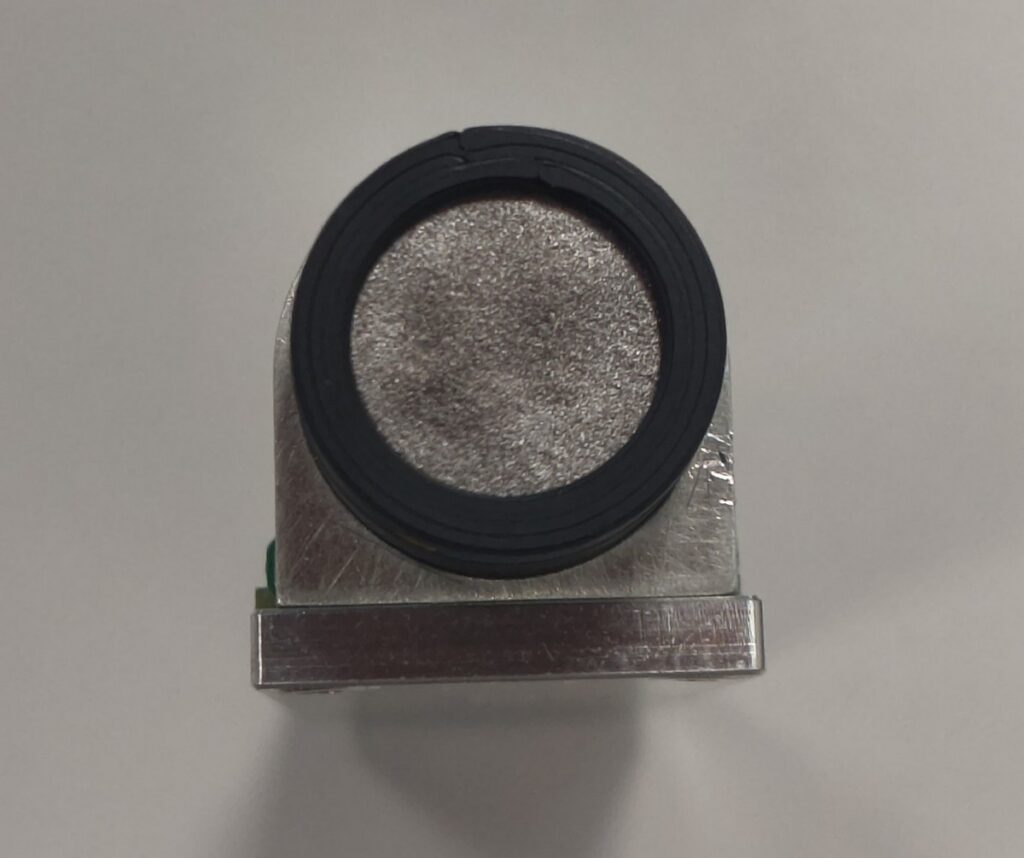
The sensing element is a 13 mm², 0.5 mm thick silicon drift detector with a graphene window. The detector is biased up to -130 V and powered together with a commercial cube preamplifier mounted at the detector side. For low-noise operation, the electronics also drive a double-stage TEC module that can bring the detector below -40 °C when required. The full instrument consumes about 1 W from a single USB 5 V line, with the main power budget devoted to TEC operation and high-voltage generation, while signal acquisition and digital processing consume only about 75 mW.
The signal path uses a 12-bit ADC integrated in the microcontroller. A timestamp resolution of 0.1 μs and a maximum input count rate of about 600–700 kcps make the device suitable for demanding X-ray measurement tasks, including high-rate environments where compactness matters more than ultimate throughput.
Measured performance already reaches 128 eV on the Fe-55 line with a 1.5 μs peaking time at about 1 kcps input count rate. The instrument can operate in high-precision mode, optimized for best resolution, or in high-speed mode, where throughput is increased at the cost of some energy resolution. Output data can be streamed in oscilloscope mode, single-event waveform mode, single-event waveform with timestamps, or histogram mode with 2048 bins. A Python-based GUI provides flexible control, easy customization, and straightforward integration into experimental workflows.
IOTXRF-2026 is built on a high-density mixed-signal PCB with three DC-DC converters and twelve power rails in a 2 x 4 cm, 4-layer layout. The electronics are packaged in a custom aluminum enclosure with multiple mounting options, EMC/EMI filtering on external lines, and automotive-grade components throughout. No isolation is used, but factory calibration and automatic baseline compensation remove the need for user-side calibration. The device is designed to operate across a wide range of conditions, including vacuum, and weighs less than 20 g including enclosure and baseplate.
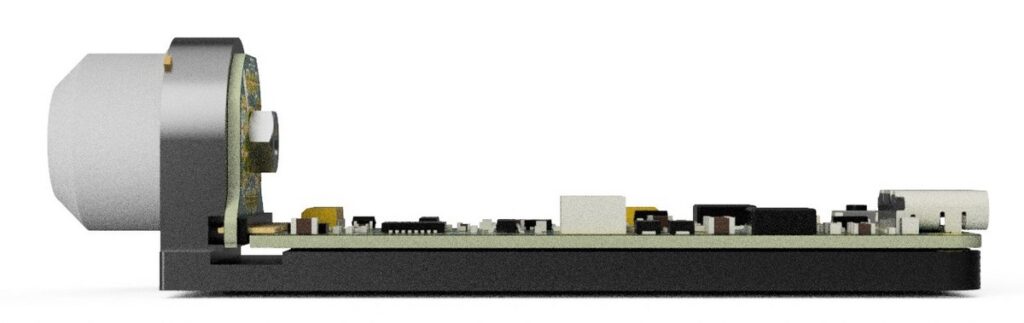
Its strengths are performance, size, low power dissipation, easy system integration, and scalability. IOTXRF-2026 can serve as a standalone portable XRF instrument, a building block for multichannel synchrotron-line systems, a pixel in a multipixel X-ray camera, or a lightweight detector for advanced platforms such as rovers, drones, and meteorological balloons.